


| Author(s) / Composer(s) Hector Berlioz | |
| Contributeur(s) Piano Solo transcription: David Neyrolles | |
| Language(s) |
French |
|---|---|
| Collection | |
| Publisher |
Editions Bourgès R. |
| Reference |
EBRA078 |
| ISBN/ISMN |
9790560151656 |
| Instrumentation |
Piano Solo |
| Binding |
Stapled |
| Delivery method |
Digital format, Paper format |
| Publication date |
2008 |
| Weight (grams) |
100 |
| Format |
22,5 x 32 |
| Number of pages |
3 |
| Reference |
E178 |
Hector Berlioz
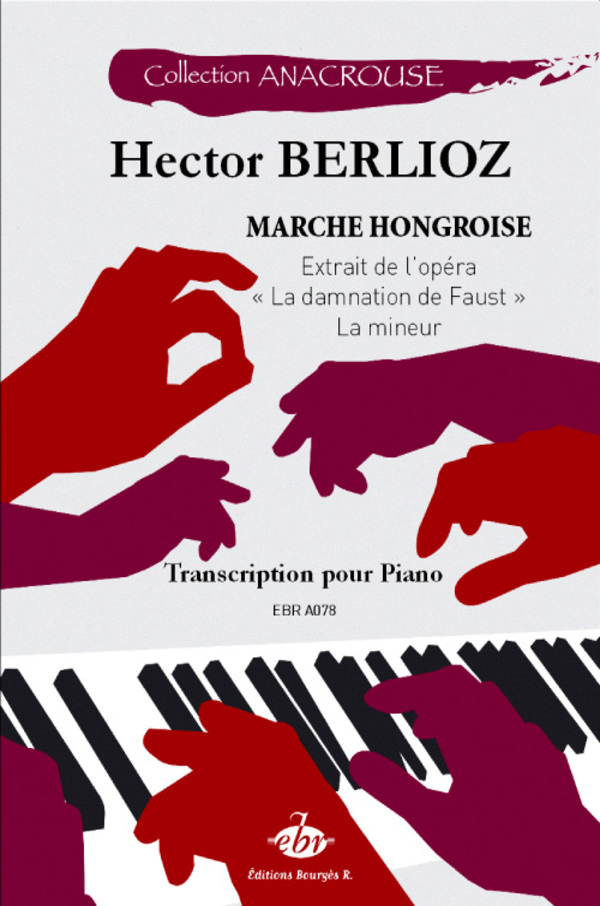
Hungarian MarchThe Anacrouse collection offers pianists, beginners and advanced alike, a wide choice of classical works from the Renaissance to the present day. It brings together major works of the repertoire as well as rarer pieces, and also offers transcriptions for piano solo or four hands, selected for their musical and educational interest. Each score, available individually, benefits from careful editorial work: a rigorously established musical text, clear and legible engraving, accompanied by a short biography of the composer and a note on the work.
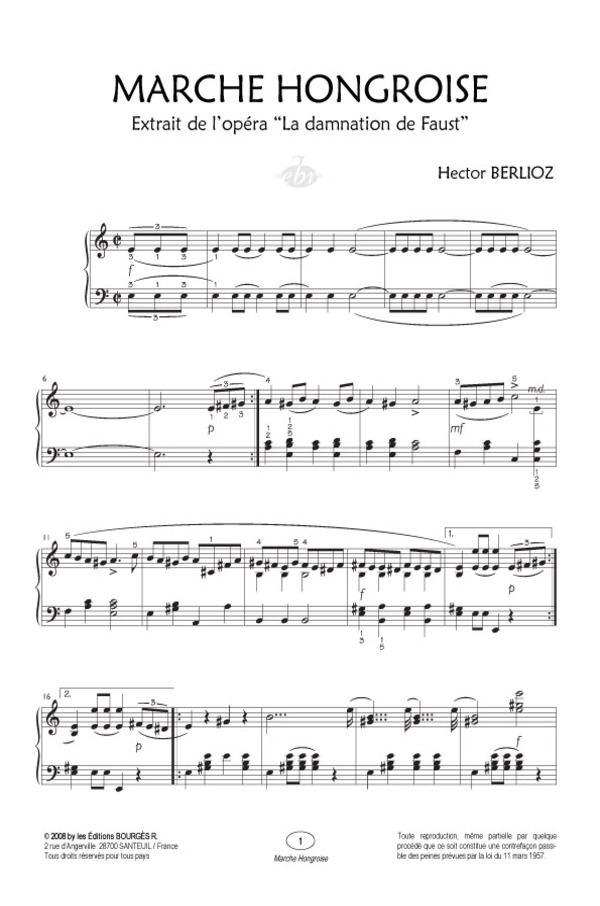
La "Marche Hongroise" (en La mineur), présentée ici dans une transcription pour piano solo de David Neyrolles, est une pièce de caractère qui exige une grande précision rythmique et un sens affirmé de la dynamique. Ce titre est extrait du recueil de référence "9 Thèmes classiques célèbres pour Piano", troisième volume de la collection Anacrouse. Cette transcription de niveau élémentaire à moyen permet d'aborder la puissance de l'orchestre berliozien avec une écriture fluide, travaillant l'énergie des attaques et la netteté des rythmes pointés.
Also known as the Rákóczi March, this work was orchestrated by Hector Berlioz (1803-1869) and incorporated into his dramatic legend The Damnation of Faust in 1846. Drawing on a very popular Hungarian patriotic theme, Berlioz created a page of formidable effectiveness, which has become a pillar of the French symphonic repertoire, often heard in cinema or on television. This edition allows the pianist to rediscover at the keyboard all the fire, brilliance and warlike spirit of this emblematic piece of Romantic genius.
Hungarian March in A minor - From the opera “The Damnation of Faust”